[under construction]
I decided to add this page, even though biology isn’t really a deep interest of mine. And just for the record, any skeptic worth his “I Question Everything” card is already hopping and snorting.
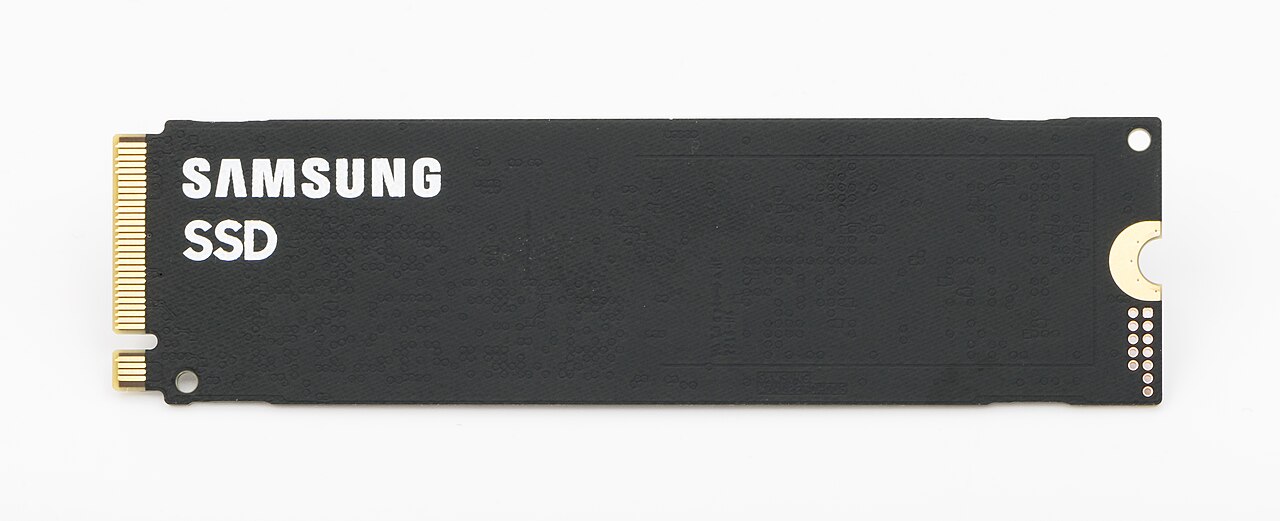
To be fair: yes, the total number of bytes in a typical male human body averages an equivalent of about 27,900,500,000,000 gigabytes, according to the All Knowing Google Machine(tm). The SSD shown above has 512 GB capacity. But while we’re throwing around “wow” numbers, if you could take all the DNA in this average body and place each strand end to end, it would reach past Pluto.
But the real reason I’m writing this is because — once again! — we now know a lot more. Let’s start with this: for decades, ever since DNA was first described in the late 1950s, the standard evolutionary paradigm of “random mutations via natural selection” has reigned supreme. More to the point, it was believed until very recently that DNA was simply a bunch of instructions for building proteins … in essence, each protein was described and built that way.
We now know that it’s a lot more complex than that. In fact, DNA is an information and retrieval system that is capable of searches, building proteins on the fly and much, much more. Folks like Richard Dawkins have, in the past, pointed to so-called “junk” coding in DNA as proof of random mutations and natural selection.
But it turns out the “junk” sections actually serve a very important purpose.