

Where were you when I laid the earth’s foundation? — God, speaking to Job (NIV)
A Cosmos Fine-Tuned For Life
John Polkinghorne (1930-2021) — Mathematical Physicist, one-time Dean of Queen’s College at Cambridge and an ordained Anglican minister — has said this about our Cosmos (from the Q/A section of his website; my [comments] are in brackets):
- No competent scientist denies that if the laws of nature were just a little bit different in our universe, carbon-based life would never have been possible. Surely such a remarkable fact calls for an explanation. If one declines the insight of the universe as a creation endowed with potency, the rather desperate expedient of invoking an immense array of unobservable worlds [i.e., the “many worlds/multiverse/’unlimited horizons'” proposals] seems the only other recourse.”
Some will immediately pounce on what they think is a qualifier in that comment: “carbon-based life.” More on that a bit later.
There is a consensus among cosmologists that our universe appears to be fine-tuned for life. There are questions about the details and debates over what it means, but there is broad general agreement on this nowadays … regardless of what you might have read elsewhere. (*cough*)
(In fact, here’s a freebie for my skeptic/atheist friends: if you insist on avoiding a Theistic conclusion, go with the Multiverse. That’s the trend nowadays, not nitpicking the “fine-tuned cosmos” stuff. Don’t take my word for it, click the links that I’ve provided.)

Other References
The caption for Dr. Faber’s image (above) includes a link to a nice PBS story on this. I was also delighted to find this laycreature-level discussion from 2011 at Harper’s Magazine. Both reinforce what I said in the introduction: given the fine-tuning in our cosmos, either there’s a Creator or there are other universes. (Of course, the latter is the focus of both of these articles).
For a uniquely Christian perspective, The Reasons To Believe Website is a good place to start. Dr. Hugh Ross is sometimes criticized for rushing to conclusions on skimpy evidence (Dr. Luke Barnes, whom you’ll meet in a moment, is one such critic). But if you’re not a scientist and want a great, laycreature-level view from a conservative Biblical perspective, you can’t beat it.
I’ve had mixed luck with general Web searches lately. As I mentioned earlier, Google returns a mind-roasting mix of polemics and screeds. Wikipedia, while useful, often gives too much weight to arguments that aren’t widely accepted. Its strength is also its weakness: anyone can edit it. People can (and do) go on there with pet theories and axes to grind.
Stenger vs Barnes
One name often associated with “activist” atheism is the late Dr. Victor Stenger. The man was beloved of atheists who were trying to stamp out that aggravating fine-tuned Cosmos thing. After all, he was an accomplished particle physicist and philosopher who questioned many of its underlying assumptions. (He even wrote a bunch of books.)
Luke Barnes, an astrophysicist, has been an outspoken critic of Stenger. Barnes harshly criticized Stenger’s “MonkeyGod” program on his blog and finishes with,
- Allow me to state my conclusions with the kind of candour only allowed in the blogosphere: MonkeyGod is bollocks. It is worse than irrelevant – it is misleading …
- The worst part is that others are taking Stenger’s work as the definitive debunking of fine-tuning. [Stephen adds: I’ve seen this myself on the Web. Many skeptics apparently think that MonkeyGod rocks like the Stones.]
Barnes has also published a peer-reviewed, in-depth defense of a fine-tuned Cosmos (using as its foil Stenger’s The Fallacy Of Fine Tuning) (PDF). It’s one of the most devastating critiques I’ve ever read. It’s uber-geeky and filled with weird math that might cause your head to explode, though. (Unless you like weird math, of course. Or an exploding head. Otherwise, you have been warned.)
Another Example
I’m not going to do the usual List Of Fine Tuned Stuff. (If you really want one, Dr. Ross has made this PDF.) I think it’ll be more fun to actually pick one example and walk through it, step by step.
We’ll start again about one millionth of a second after the Big Bang. The universe has cooled enough for the Four Fundamental Forces (a great name for a Pretty Boy Band, by the way) to split off. We’re left with a hot Quark-Gluon Plasma and now things get a bit crazy(er) for the next 10 seconds or so.
The strengths of the Four Fundamental Forces, the temperature at any given moment, the expansion rate and some other things had to work together perfectly for what I’ll show you next.
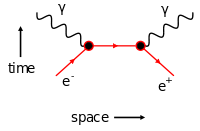
Things are still extremely unsettled and ridiculously hot (many billions of degrees). All sorts of strange things are happening: photons are energetic enough that some turn into electrons and anti-electrons (“positrons”). Anti-neutrinos can combine with protons to form a neutron and a positron. A neutrino and a neutron could combine to form a proton and an electron. And vice-versa. Both matter and anti-matter versions are created … .. .. wait, what?
This could be a problem. Matter and antimatter hate one another. They are equals-but-opposites that annihilate (i.e.,”boom”) when they come together, releasing pure energy.

Matter vs. Antimatter (Matter wins. Barely.)
First, Quarks combine to make the Hadrons, including protons and neutrons, in both matter and antimatter varieties. Conditions are just right for us to end up with several times more protons than neutrons. This is a good thing, because once the madness is done, we’ll end up with mostly hydrogen and a smidge of helium.
Unfortunately, at this moment, the madness isn’t done yet. Once the Cosmos cools a bit more, the matter and antimatter versions of the hadron particles have a throw down hissy fit: they annihilate like mad.
More time passes, more cooling … then, between 1 and 10 seconds after the Bang, the Leptons (including electrons) are created in both matter and antimatter flavors. These also annihilate each other like mad.
(By the way, remember what I said about scientific theories being testable/falsifiable? The gamma ray photons that were thrown out by all of this annihilation eventually cooled, dropped in frequency and became the source of the cosmic background radiation, one of the strongest evidences for a big bang.)
Everything that you see around you today is made from the relatively-few survivors (about .00000001%, known from the ratio of the CMB photons to neutrons/protons) from these two separate annihilation events. The most common theory is that a very slight asymmetry (called a “CP violation” by the propeller-heads) caused a bit more matter than antimatter to form. But that’s not the brain-bender.
Here’s The “Coincidence:”
Remember, this madness occurred under conditions of complete chaos. Each time there was annihilation, the amount of available energy increased for a brief period, allowing more particles to be created. And as I said earlier, if there’s enough energy to create a particle, it could be created. You can predict a range of percentages of what might be created, but not the final result.
But on a cosmic scale (don’t miss that) the numbers of electrons and protons must be equal to a very tiny fraction of a percent. If not, electromagnetic effects would dominate and overwhelm gravity. (It’s that old “like charges repel” thing.) Galaxies and stars couldn’t form, because the strength of the electromagnetic force is a 10 times a billion billion billion billion (10 to the 37th, for those who like large numbers) times more powerful than gravity.
Victor Stenger has claimed that charge conservation would have guaranteed this, making it a non-issue. That is rejected by Barnes thusly: “[charge conservation] doesn’t imply that the net charge of the universe is zero, only that it be constant.” (Translation: Stenger is simply wrong.)
These particles were created in two separate events, each time annihilating one another like a swarming horde of blind-drunk rednecks with plasma cannons. Not once, but twice. And yet, we ended up with the same number of protons and electrons, and (thanks to the Weak Force, among other things) just the right mix of hydrogen and helium.

“Aw, C’mon, Poole!”
Now: those who disagree will raise any number of arguments to what I just said. The most common is, “of course it worked out this way, or we wouldn’t be here!” That’s just a laycreature’s variant of the Anthropic Principle. In practice, that person is simply saying, “I don’t care and I’m not impressed” — hardly a conclusive (and anything but a “scientific”) argument.
(If they’re really up on the lingo, they’ll call it “puddle logic.” You have been warned.)
Those with a more scientific bent will argue that it worked out so neatly because it had to. The laws of physics contained the slight asymmetries and other forces that caused a slight excess of matter over antimatter (twice), then forced the proton/electron ratio to be unity.
OK. But that doesn’t answer the question of why. Who or what caused our laws of physics to be so precisely-balanced that we would get exactly what we need for galaxies, stars and intelligent life from STUFF, and under conditions of absolute chaos?
“There’s no evidence that the laws of physics could be any other way,” you might then respond. OK again: instead of a Transcendent Creator, you prefer Transcendent Laws And Principles That Just Happen To Be So Incredibly Fine Tuned, They Create A Cosmos In Which People Like Us Can Argue And It’s No Big Deal. Fine; that’s your choice. But recognize it for what it is.
“But Other Forces Could Be Adjusted To Compensate …”
This is another objection raised by Stenger and some others. A typical “fine-tuning list” will contain things like, “if the Strong Force was a few percent different, we wouldn’t be here.” These folks correctly point out that you could “adjust” other parameters to compensate.
That’s true, but for the life of me, I don’t understand how they think this will help them. To once again quote Dr. Barnes (from his critique of MonkeyGod, linked above):
-
- Expanding parameter space into other dimensions opens up new possibilities for life-permitting universes, but also increases the amount of “dead-space” …
- Finding other possibilities for life is not the same as showing that life-permitting universes dominate the space of possible universes. Remember: the claim is not that ours is the only universe that could support life, or that we are the only possible form of life. The claim is that if a universe were chosen at random from the range of possible universes, the probability of that universe being able to support intelligent life is very small.
This is just simple math. If I give you a problem with two or three variables, that’s one thing. But each time I add another variable, yes, you have more opportunities to adjust for a specific result — but it becomes exponentially more difficult to get that desired end result. Nor (as Barnes carefully — and correctly — points out) does this somehow magically widen the opportunities for a life-friendly universe. The opposite is true.

Carbon Chauvinism?
Skeptics will immediately latch on what they think is a qualifier in Polkinghorne’s comment (see above): “carbon-based life.” They frequently object that carbon-based life as we know it may not be the only possible form. I can’t speak for anyone else, but I don’t have a problem with this.
Just as with the multiple-interdependent-parameter thingy discussed above, I also don’t understand how they think this could help them, either.
For the record, I agree that God could have made us as energy beings, or as blobs in a “mini-verse” the size of Rhode Island. Instead of stars, we might have had … Space Heaters! (Sorry. Couldn’t resist.)
Those who actually work with this stuff (as opposed to those who just argue about it) say you will need a mind-numbingly significant level of organization for any cosmos that will eventually develop intelligence — of any form. I don’t care what you propose or how you propose to do it.
By the way — if you argue that intelligence isn’t the ultimate goal, you didn’t just shoot your argument in the foot. You annihilated it like a redneck with a plasma cannon. I’ll let you figure out why as you hop back from the hospital.

The Appeal To Chewbacca
You want a really crazy example? Some scientists not only believe in the multiverse, they think that one day, you may even be able to create a universe of your own. While the very thought should send us screeching into the shrubbery (what could possibly go wrong?!?), we are fearless. We shall roll with it.
OK: your Acme Universe Kit has arrived in the mail. You’ve installed the batteries and all the blinkie lights look good. Your assignment is to create a little itty-bitty ‘verse with a single intelligence in it. Just one. That shouldn’t be too hard, should it?
You can set up your own physical laws, from the attractive forces to the binding forces to you name it. BUT … since any skeptic worthy of the label would insist that our current universe has no guiding intelligence, you shall press the little red button, fire off your version of a Mini-Big-Bang and just let it run. Hands off. Everything else must just fall into place, with no further tweaks or diddles from you.
Some time before your miniverse experiences its version of heat death, I want at least one sentient life form who is able to look around and ponder on what he/she/it/wibble/g’Ronk sees. Think you can do it?
The “carbon chauvinism” argument is an Appeal To Chewbacca. Let’s forge ahead.

Some Philosophical Objections
I’ll spend more time on the philosophical arguments against a Creator (and against Christianity in particular) later, but let’s take a brief glance.
Why is this cosmos the way it is? Assuming your Acme Universe Kit works and you actually succeed in creating sentience (congratulations!), two things will dawn on you. First, that you had to tweak the daylights out of that thing to make it work (in other words, intelligent design). Second, listening to your little sentience ask that question will give you a whole ‘nuther level of appreciation for the term, “irony.”
If this cosmos is “designed for life,” why is life so rare? Actually, there’s growing evidence that single-celled life may be quite common, at least in our little corner of the galaxy. The hard part is making intelligent life such as you and I.
Use the menu or click here for a look at how stars create the elements for life chemistry.